Every week, we talk to companies that know they need to optimize for AI search but have no idea where to start. The problem isn't a lack of content — it's a lack of content that AI engines can actually use effectively.
GEO content strategy is different from SEO content strategy. The rules are new, the formats are different, and the success metrics don't look like anything you're used to. Here's a step-by-step approach to building a GEO content strategy that works.
Step 1: Audit Your Current AI Visibility
Before creating anything new, understand where you stand. Pick 10-15 queries that are critical to your business. Ask them to ChatGPT, Gemini, Kimi, and Copilot. Document:
This baseline gives you your GEO starting point. Most companies discover they're invisible on 80-90% of key queries.
Step 2: Map Your Content to AI Search Patterns
AI search engines favor specific content patterns. Map your content strategy around them:
The Question-Answer Pattern. AI engines are designed to answer questions. Structure content as clear questions and thorough answers. For every piece of content, ask: "What specific question does this answer?"
The Comparison Pattern. Users frequently ask AI to compare options. Content that clearly compares your solution vs. alternatives gets referenced more often.
The How-To Pattern. Step-by-step guides are highly valuable to AI engines because they provide structured, authoritative information.
The List Pattern. While traditional SEO often discourages listicles, AI engines actually favor them — when they're substantive. "5 Key Factors" or "10 Steps" formats provide clear structural signals.
Step 3: Build Authority Signals Into Every Piece
GEO rewards content authority at the individual piece level. Every article should include:
Step 4: Optimize Content Structure for AI Consumption
AI engines parse content differently than human readers. Optimize for machine readability:
Step 5: Create Content Clusters, Not Isolated Posts
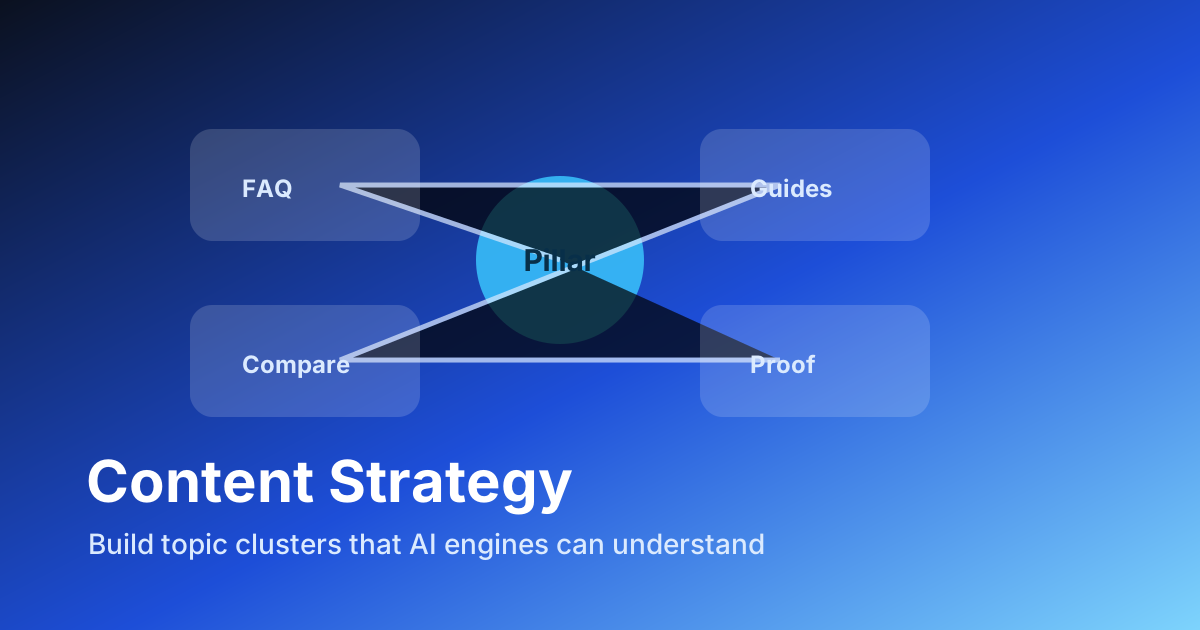
AI engines prefer depth over breadth. A single comprehensive cluster of 5-8 related articles on a topic is more valuable than 20 scattered posts:
This cluster structure signals to AI engines that you're an authority on the topic, not just a surface-level source.
Step 6: Refresh and Maintain
GEO content isn't "set and forget." AI knowledge bases update continuously. Set a content refresh cadence:
The companies that win at GEO are the ones that treat content optimization as an ongoing process, not a one-time project.
Need end-to-end support? Our GEO consulting and content optimization services cover everything from strategy to execution.
*Building a GEO content strategy from scratch? Synta Technology can help. We offer content audits, strategy development, and implementation support. Contact us for a free GEO content consultation.*