A few months ago, one of our clients asked a simple question: "How do I know if GEO is actually working?"
It's a fair question. With SEO, you have decades of established metrics — organic traffic, keyword rankings, bounce rate, conversion rate. But GEO is new, and the metrics are different.
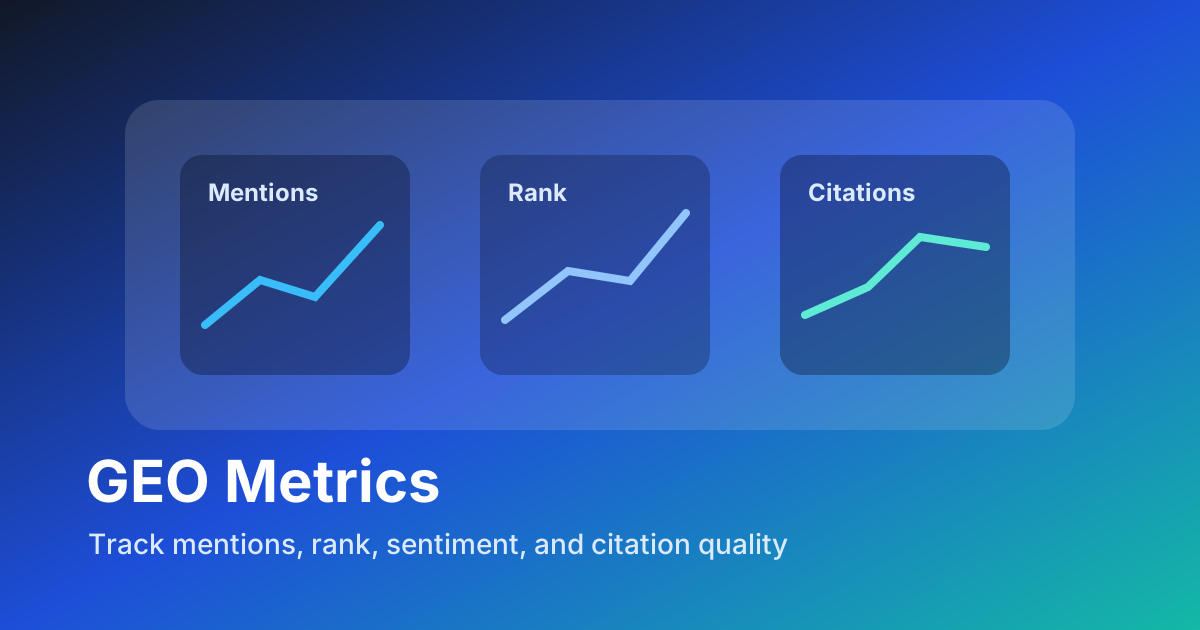
If you're investing in Generative Engine Optimization, you need to know what to measure. Here's a practical framework for tracking GEO performance.
Metric #1: AI Citation Rate
The most direct measure of GEO success is how often AI-generated responses cite or reference your brand.
How to track: Use AI search monitoring tools (or manual sampling) to check if your brand appears when you ask AI engines relevant industry questions. Set up a monthly audit: pick 10-20 key queries, ask them across ChatGPT, Gemini, Kimi, and Copilot, and record whether your brand is mentioned.
Benchmark: For most B2B companies, a 20-30% citation rate on key queries is a strong starting target.
Metric #2: AI Sentiment Score
It's not just about being mentioned — it's about how you're mentioned. AI engines reflect the overall sentiment of the content they're trained on.
How to track: When your brand is cited, analyze the tone. Is your company described as a "leading provider" or just "a provider"? Is the description accurate and positive?
Benchmark: Aim for consistently positive or neutral mentions on at least 80% of tracked queries.
Metric #3: Content Authority Score
GEO engines evaluate authority differently than search engines. Domain-level authority matters less; content-level authority matters more.
Factors that contribute:
How to track: Use a content authority matrix. For each piece of GEO-optimized content, rate it on depth, credibility, and citation potential.
Metric #4: Referral Traffic from AI Platforms
While AI engines don't always send direct clicks like Google does, they increasingly include inline citations that drive referral traffic.
How to track: Monitor analytics for referral traffic patterns. Look for unusual traffic sources or referral paths that suggest AI-driven visits. Set up custom alerts for sudden traffic spikes from unfamiliar domains.
Benchmark: Early GEO adopters typically see referral traffic from AI platforms grow 10-30% month over month during the first 6 months.
Metric #5: AI Context Coverage
This is about completeness — does AI understand the full scope of what your company does?
How to track: Map your key brand messages, products, and differentiators. For each, check whether AI-generated recommendations mention them. If AI only knows half your story, you have coverage gaps.
Benchmark: Target 70% or higher context coverage — meaning AI mentions at least 7 out of 10 of your key brand messages when describing your company.
Building a GEO Dashboard
Here's a practical weekly GEO tracking dashboard:
The key insight: GEO measurement is fundamentally different from SEO measurement. You're not optimizing for a ranking position on a search result page. You're optimizing for quality, completeness, and accuracy of AI-generated responses about your brand.
Start tracking these metrics early, even if they're rough. The data you collect now will tell you what's working — and what needs adjustment.
Need continuous tracking? Our real-time monitoring service provides 24/7 AI citation tracking across all major platforms.
*Ready to measure your current GEO performance? Synta Technology offers a free GEO audit that includes citation analysis, sentiment scoring, and coverage mapping. Contact us to get started.*