AI visibility monitoring is the process of tracking how often AI answer engines mention, recommend, rank, and cite your brand when buyers ask commercial questions. It is becoming a practical marketing discipline because buyers increasingly use ChatGPT, Gemini, Perplexity, Claude, Copilot, and Kimi to compress vendor research.
Traditional analytics can show traffic after a user reaches your website. AI visibility monitoring shows whether your brand is even part of the answer before a buyer visits any site.
What AI Visibility Monitoring Measures
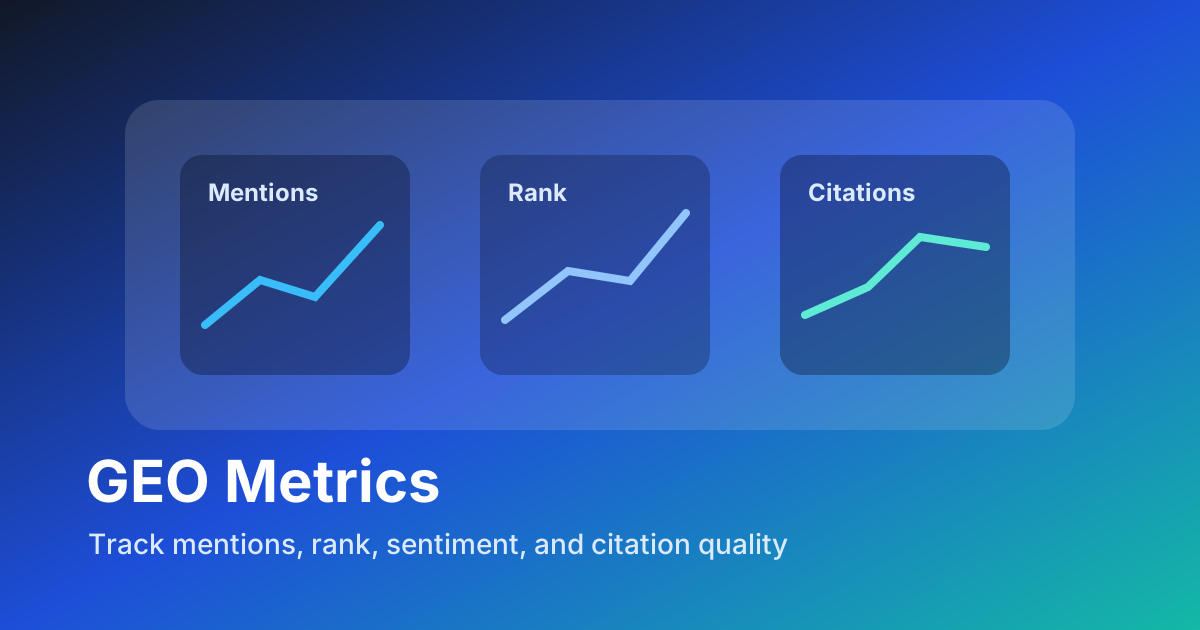
A useful monitoring program should track five signals: brand mentions, recommendation rank, competitor share of answer, sentiment, and citation quality. Mention count alone is not enough. A brand can be mentioned but positioned weakly, described inaccurately, or outranked by competitors.
The strongest monitoring programs use buyer-intent prompts rather than generic keywords. Instead of only asking "what is [brand]", test prompts such as "best AI visibility monitoring service for B2B brands" or "compare GEO agencies for enterprise marketing teams".
Which AI Engines Should You Track?
Start with the AI platforms your buyers are most likely to use. For many English-language B2B markets, the first set should include ChatGPT, Gemini, Perplexity, Copilot, and Claude. If the target market includes China or Asia-focused buyers, Kimi and Qwen can also matter.
Different engines can produce different recommendations because they use different retrieval patterns, source ecosystems, and model behavior. That is why a single-platform test is not enough for a serious GEO program.
From Snapshot to Ongoing Monitoring
Most brands should not start with a large monitoring contract immediately. A better first step is a free or low-cost snapshot that tests a small group of buyer prompts. If the snapshot shows that competitors are being recommended while your brand is absent, then a deeper audit is justified.
Synta follows that path with a free AI visibility checker, a baseline audit, and then managed AI visibility monitoring when the business case is clear.
What Good Reporting Looks Like
Good reporting should make the problem obvious to a sales or marketing leader. It should answer: Which prompts matter? Which AI engines recommend us? Which competitors appear more often? Which sources are being cited? What content or authority signals should be improved next?
A report that only gives a score is not enough. The score should point to concrete actions such as improving service pages, adding FAQ content, publishing comparison pages, earning third-party mentions, or clarifying product positioning.
Practical Takeaway
AI visibility monitoring helps brands understand the new discovery layer before it shows up in website analytics. If your buyers are asking AI tools who to trust, you need to know whether your brand appears, how it is described, and which competitors are winning the answer.